- 21 November, 2026
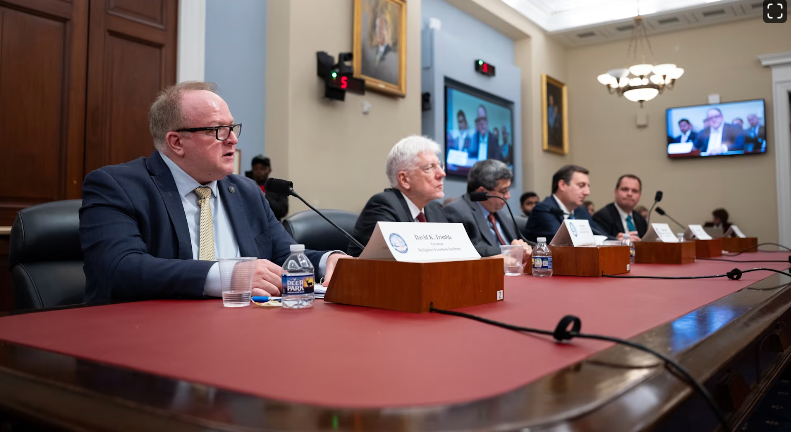
WASHINGTON, November 21, 2026 : Christians remain the world’s most persecuted religious community, with millions facing discrimination, violence and restrictions on their freedom of worship, experts told a US congressional hearing examining religious persecution around the world.


The hearing, held on November 18 by the Tom Lantos Human Rights Commission on Capitol Hill, brought together lawmakers and specialists to discuss growing threats to Christians, particularly in countries affected by political instability, armed conflict and extremist violence.
Co-chaired by Representatives Chris Smith, a Republican from New Jersey, and James P McGovern, a Democrat from Massachusetts, the hearing examined the different forms of religious-freedom violations and possible measures to protect vulnerable communities.
The commission cited Open Doors’ World Watch List, which estimates that more than 388 million Christians in the 50 countries it monitors experience high levels of persecution and discrimination.
According to a commission memorandum, violations range from state-sponsored repression and denial of basic rights to attacks by armed groups and international criminal networks. The expansion of extremist organisations and the actions of oppressive political regimes have further aggravated the situation.
Nigeria among the deadliest countries for Christians
David Trimble, president of the Religious Freedom Institute, described Nigeria as the country where Christians face the most severe threat of persecution.
He told the hearing that violence was being perpetrated by extremist organisations affiliated with Al-Qaeda and the Islamic State, including Boko Haram, as well as militant groups and criminal gangs.
Trimble alleged that these groups frequently operate with impunity and, in some cases, with government assistance.
Citing figures from Open Doors International, he said more than 3,100 Christians were killed in Nigeria in 2025, while nearly 3,500 had reportedly been killed in 2026 so far. Almost 2,300 Christians had also been kidnapped during the year, he added.
Trimble recommended greater investment in religious-freedom education in countries experiencing persecution, describing education as an important deterrent to violence and a means of preventing genocide.
Concerns over Christians and minorities in Syria
Trimble also warned that Christians and other religious minorities in Syria continued to face violence and religious-freedom violations following the fall of Bashar al-Assad’s regime. He said the threat of genocide remained a concern.
He proposed establishing an Atrocity Prevention Commission with statutory authority. The proposed body would comprise experts tasked with analysing geopolitical developments linked to persecution and recommending responses to prevent violence and genocide.
Turkey’s growing regional influence
John Eibner, president of Christian Solidarity International, described Christians as the most persecuted religious community globally.
Citing Vatican estimates, he said 5,000 people were killed because of their Christian faith in 2025, while 400 million faced violence or persecution.
Eibner highlighted Turkey’s growing geopolitical influence, warning that religious-freedom violations could have serious consequences for Christian communities in Azerbaijan, Armenia, Syria and neighbouring countries.
He referred to findings by the US Commission on International Religious Freedom that described violations in Turkey as systematic and ongoing.
Eibner criticised Western governments for what he called their failure to adequately address the plight of Christians in the region. He urged US policymakers to prioritise the survival of vulnerable Christian communities and other religious minorities.
Other witnesses included Timothy Shah of the University of Dallas, attorney Jeremy Tedesco of Alliance Defending Freedom, and Matthew Soerens of World Relief.
The hearing sought to draw attention to the scale of global religious persecution and the need for stronger measures to defend freedom of religion and protect vulnerable communities.
Courtesy : EWTN News






© 2026 CATHOLIC CONNECT POWERED BY ATCONLINE LLP