- 12 August, 2026

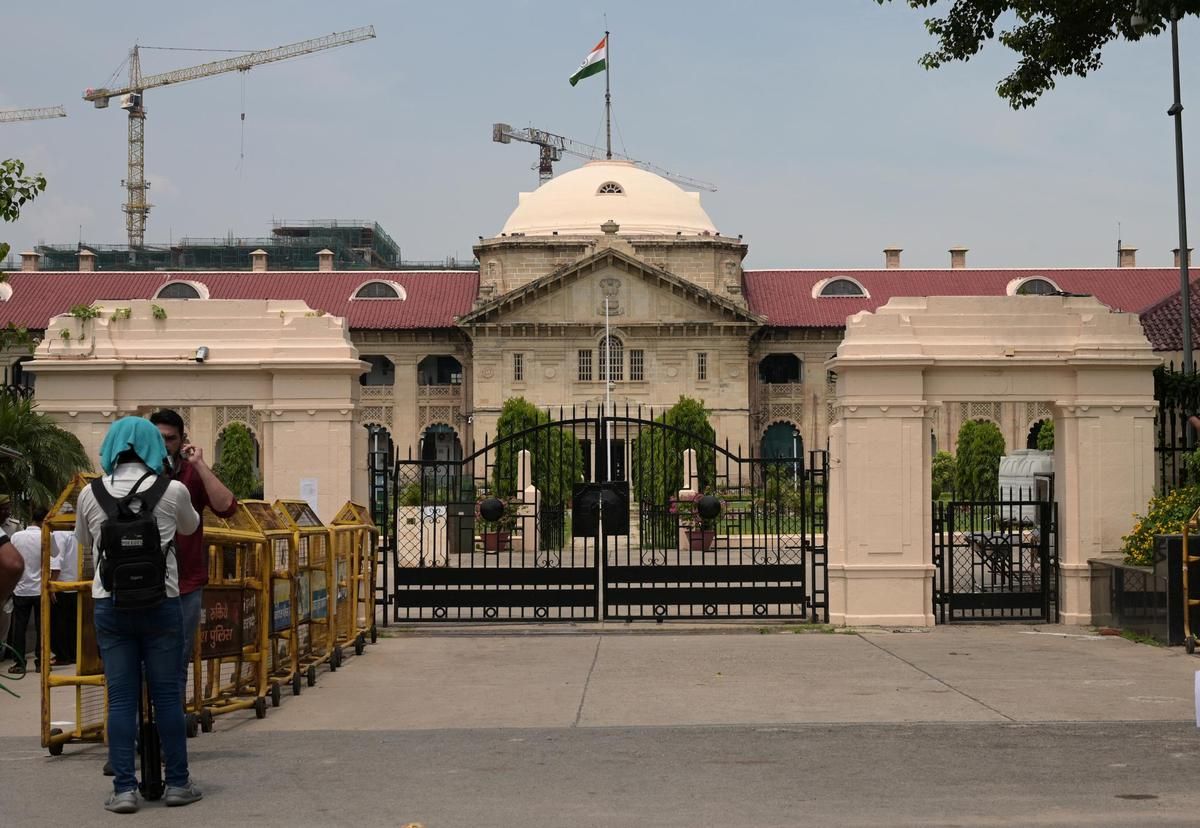
ALLAHABAD, August 12, 2026: The Allahabad High Court has ordered the release of two adult sisters who said they had voluntarily converted to Islam, affirming their right to choose their faith, residence and personal affairs without unlawful interference from family members or the State.


Justice Sandeep Jain, hearing a habeas corpus petition on August 6, directed the Uttar Pradesh government and the women’s father to pay ₹25 lakh in compensation after finding that the sisters had been unlawfully confined.
The women, aged 35 and 20, had approached the court alleging that their father had restricted their freedom because of their religious choices. The High Court ruled that both were free to live wherever they wished and with anyone of their choice, and directed authorities to ensure their peaceful residence and provide protection if required.


The court described the alleged detention as a serious violation of their constitutional rights and directed the father not to interfere with their liberty, movement, residence, profession or religious choices.
It also ordered him to return within seven days their passports, educational certificates, identity documents, bank passbooks, cheque books, documents relating to their conversion and other original belongings.
Compensation for Violation of Fundamental Rights
The court ordered ₹25 lakh in compensation for the violation of the women’s fundamental rights. The State government was permitted, subject to law and due process, to recover 50 per cent of the amount from the father and the remaining 50 per cent from any public servant whose actions or omissions contributed to the deprivation of their liberty.
The court held that the alleged confinement had no legal sanction and that the State had failed in its constitutional responsibility to safeguard the women’s freedom.
Conversion Proceedings Separate from Detention
During the hearing, the Uttar Pradesh government opposed the habeas corpus petition, claiming that the alleged conversions were linked to a wider conspiracy and that an investigation was already under way.
The State referred to a criminal case invoking provisions of the Bharatiya Nyaya Sanhita and the Uttar Pradesh Prohibition of Unlawful Conversion of Religion Act, 2021.
Counsel for the women argued that the conversion law was not attracted because there was no evidence that the conversions had been carried out through force, fraud, coercion or deception.
The High Court, however, distinguished between questions concerning the legality of the alleged conversions and the legality of the women’s detention. It held that even if the conversion proceedings raised legal questions, those issues could not justify the continued confinement of adult women by their father.
The court made clear that its order concerned the women’s alleged illegal detention and did not determine the merits of the pending criminal proceedings or conclusively rule on the validity of their conversions.
Adult Choice and Religious Freedom
The ruling emphasised that adult citizens have the legal capacity to make decisions concerning their faith and personal lives. The court’s observations were limited to the issue of personal liberty and were not intended to bring the wider criminal investigation to an end.
The judgment also underlined that parental authority cannot extend to imprisoning adult children because of disagreements over their religious beliefs or personal decisions.
By separating the question of religious conversion from that of unlawful confinement, the High Court reaffirmed the constitutional protection of individual liberty. The ruling underscores that adult citizens cannot be deprived of their freedom merely because their religious or personal choices are opposed by family members or others.
The case also highlights the State’s responsibility to protect individual liberty when allegations of unlawful detention come before the courts.
While the legal questions surrounding the alleged conversions will continue to be examined in separate proceedings, the High Court’s order makes clear that such questions cannot, by themselves, justify the unlawful confinement of adult citizens.
Courtesy : The Hindu
Photo Courtesy : Getty Images/istockphoto


© 2026 CATHOLIC CONNECT POWERED BY ATCONLINE LLP