
English
Mass Readings: Amos 8:4-7 Ps 113 1 Tim 2:1-8 Lk 16:1-13
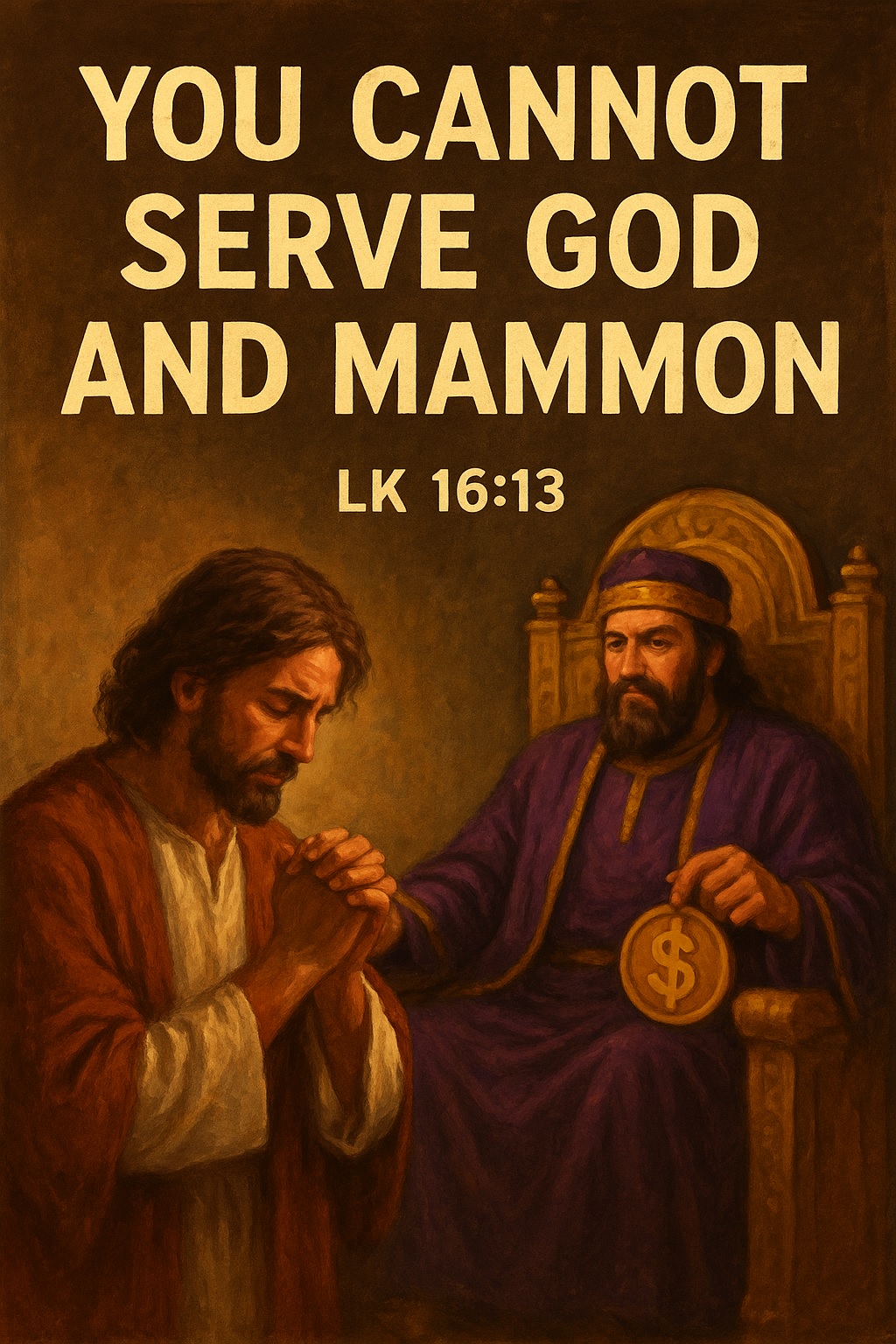
Key Verse to Meditate: No 1servant can serve two masters; for either he will hate the one, and love the other, or else he will hold to one, and despise the other. You cannot serve God and mammon" (Lk 16:13).
Dear Brothers and Sisters in the Lord,
The Twenty-Fifth Sunday in Ordinary Time comes as a clarion call against social injustices committed against the poor. It reminds us of the need to be faithful to God’s service—especially by being faithful in small matters.
In today’s Gospel, Jesus does not praise the dishonesty of the steward, but rather commends his foresight in preparing for the future. The message is simple yet profound: those who are faithful in small responsibilities can be entrusted with greater ones. We are reminded that material wealth is not ours to own, but ours to steward wisely.
The First Reading – Prophet Amos and the Cry for Justice
The prophet Amos, one of the earliest of the great classical prophets (around 750 BCE), bears a name that means “loader” (cf. Gen 44:13; Is 46:1–3)—perhaps because he laid upon Israel a heavy burden of woes. His message is a passionate cry for justice (mishpat) and righteousness (tsedaqah) (Amos 5:7, 24; 6:12), rooted in the very character of God.
While Hosea lamented Israel’s unfaithfulness, Amos thundered against Israel’s blatant violations of God’s standards. He depicts God as “the One who roars” (Amos 1:2) and declares that any religion separated from righteous living is detestable to the Lord.
Today’s reading highlights his sharp social criticism, directed at those who exploited the marketplace for personal gain—combining greed with dishonesty, especially at the expense of the vulnerable. He particularly condemns the practice of debt-slavery, where the destitute were sold “for silver” or “for a pair of sandals.” Such acts were not minor offenses but grave violations of God’s law, reducing human beings to mere commodities. The full list of these crimes appears in Amos 8:4–6 (see also Amos 5:10–12; 4:1). Through this, Amos raises the timeless theme of social justice, reminding us that God is deeply concerned for the poor and the oppressed.
The Second Reading – The Call to Prayer for All
In the second reading, St. Paul speaks about the nature and scope of prayer within the Church. He urges the Christian community to pray for all people, including those in authority, so that society may enjoy peace, godliness, and dignity (1 Tim 2:1–2).
Paul makes it clear: prayer must support the Church’s universal mission. It cannot be confined to personal concerns but must embrace the salvation of all humanity. When we pray for leaders—secular as well as religious—we are praying for a social and political order in which the Gospel can take root and flourish.
Finally, Paul exhorts believers to “lift up holy hands” in prayer (1 Tim 2:8), a powerful image of purity, sincerity, and total surrender before God.
The Gospel – The Parable of the Dishonest Steward
This Sunday’s Gospel presents the parable of the prudent (or dishonest) steward, a teaching unique to Luke. It resonates with similar lessons in Luke 12:13–21 (18th Sunday) and Luke 16:19–31 (26th Sunday). The common thread is clear: those enslaved by wealth find it difficult to break free from its grip, often leading to dishonesty and moral compromise.
In the parable, the steward had been exploiting his master’s debtors by charging excessive interest. According to the Law of Moses, such interest was strictly forbidden (Ex 22:25; Lev 25:35–37; Deut 15:7–8; 23:20–21), since it burdened the poor and often drove them into bankruptcy. By reducing the debts, the steward may have been removing these unlawful charges, thus acting more in line with the Mosaic law.
When the master discovered his mismanagement, he demanded an account and announced the steward’s dismissal (cf. Gen 42:28). The steward now had a brief window of time to settle the records. Facing the loss of his livelihood, he acted shrewdly: he reduced the debts, most likely by forgoing his own commission, thereby winning the goodwill of the debtors without causing his master financial loss.
Jesus does not commend the steward’s dishonesty but his prudence—his ability to act decisively in a moment of crisis. The point is this: just as the steward used his resources wisely to secure his earthly future, so too must disciples act with wisdom, foresight, and urgency in preparing for God’s coming judgment.
In Luke 16:8, the master praises the steward for acting shrewdly, and Jesus adds: “For the sons of this world are more shrewd in dealing with their own generation than the sons of light.” Here Jesus contrasts two groups: the “sons of this world,” who are clever and practical in securing temporal gains, and the “sons of light” (Jn 12:36; 1 Thess 5:5; Eph 5:8), who are called to live with vigilance and discernment in view of eternal realities. Sadly, the children of this world often show more determination in pursuing what is passing than the children of light do in pursuing what is everlasting.
To Gain Friends by Means of Mammon
Jesus tells His disciples: “Make friends for yourselves by means of worldly wealth, or the mammon of unrighteousness” (Lk 16:9; Mt 6:24). Worldly wealth is temporary—it vanishes with death and ultimately comes to nothing. Therefore, wealth must be shared with the poor.
The Aramaic root mammon can mean “wealth of any kind” or “that in which one puts his trust.” Jesus warns us that worldly wealth stands in opposition to heavenly treasure. Once earthly wealth is gone, the one who has given alms and used it generously will be welcomed into the eternal kingdom—as illustrated later in the parable of the rich man and Lazarus (Lk 16:19–31). Money cannot accompany us into heaven. Its value is limited when measured against eternal life. Hence, Jesus calls His disciples to recognize its limits, to use it prudently, responsibly, and generously—especially in service to the poor. The phrase to gain friends by means of mammon means using wealth in such a way that others experience your stewardship, kindness, and generosity.
Faithful Stewardship
The closing verses (Lk 16:10–13) shift the focus to stewardship: “He who is faithful in a very little thing is faithful also in much; and he who is unrighteous in a very little thing is unrighteous also in much.”(Lk 16:10).
Jesus emphasizes that no one can serve both God and wealth. Undivided loyalty is the hallmark of true discipleship (cf. Mt 25:21; Lk 19:17; 1 Cor 4:2): “To whom much has been given, much will be required” (Lk 12:48). A servant of Christ cannot divide allegiance between God and money. The disciple is expected to demonstrate loyalty, integrity, and unwavering faithfulness to Christ alone.
Jesus underlines here two key lessons:
The Quality Expected of a Steward
Jesus compares worldly wealth with heavenly wealth, and small responsibilities with great ones. He makes it clear: a disciple who is unfaithful in handling earthly goods cannot be entrusted with the true riches of heaven (cf. 1 Tim 3:5).
The lesson is simple but vital: one who is dishonest in little things will also be dishonest in greater ones (Lk 12:42; 16:11; 19:17; 1 Cor 4:2). A disciple must always remember that worldly wealth does not truly belong to him—it is entrusted to him by God. Faithfulness in stewardship, therefore, is not merely about handling money but about honouring the One who has given it.
A Story of Divided Loyalty
There was once an elderly woman who never missed Sunday Mass. After every Mass, she would approach the statue of St. Michael the Archangel and reverently kiss both the archangel and the figure of Satan crushed under his feet.
When asked why, she explained: “Father, I am old and close to the grave. If I go to heaven, St. Michael will care for me. But if I go to hell, perhaps Satan will look after me there.”
Her response, though humorous, is a warning: divided loyalty is unacceptable in the eyes of God. We must choose whom we serve.
No One Can Serve Two Masters
The final warning of Jesus in today’s Gospel-“You cannot serve both God and wealth” (Lk 16:13)-is both a call to integrity in God’s service and a caution against becoming enslaved by possessions. As disciples, we must guard ourselves against the temptation to be mastered by worldly wealth or mammon.
May we be found, in God’s sight, faithful in small matters, wise in the use of our resources, and steadfast in serving Him above all else. God demands undivided and exclusive loyalty. Spiritually, this means that if we attempt to serve both God and mammon, we will inevitably fail to render to God the wholehearted devotion that His glory and honour deserve.
Conclusion
In today’s parable of the dishonest manager, Jesus highlights not only the danger of worldly wealth but also the misuse of wealth that is dishonestly acquired or selfishly employed. The lesson is clear: disciples of Christ must recognize that they are not owners of material possessions but stewards of them.
Rather than fixing our hearts on earthly wealth, we are called to set our minds on the true treasure—Christ Himself, the Light who has come into the world and enlightens every person (Jn 1:9). When we live with this perspective, God entrusts us with the greater riches of faithful stewardship.
In the New Testament, stewardship is not limited to material possessions; it is also applied to the proclamation of the Gospel. St. Paul, in particular, presents this as the highest form of stewardship (cf. 1 Cor 9:17; Rom 3:2; Gal 2:7; 1 Thess 2:4; 1 Tim 1:11; Tit 1:3). Thus, our true calling as disciples is to use material resources responsibly while dedicating ourselves to the greater mission of witnessing to the Gospel, which is the treasure of eternal value.
Points for Personal Reflection
1. Am I divided in my loyalty to God?
2. Do I serve God or wealth?
3. Do I act as a steward of material possessions or as their owner?
4. How do I treat the poor I encounter, remembering Amos’ warning?
5. Do I pray sincerely for leaders—spiritual and political—so that society may reflect God’s justice and peace?
© 2026 CATHOLIC CONNECT POWERED BY ATCONLINE LLP