- 09 June, 2026

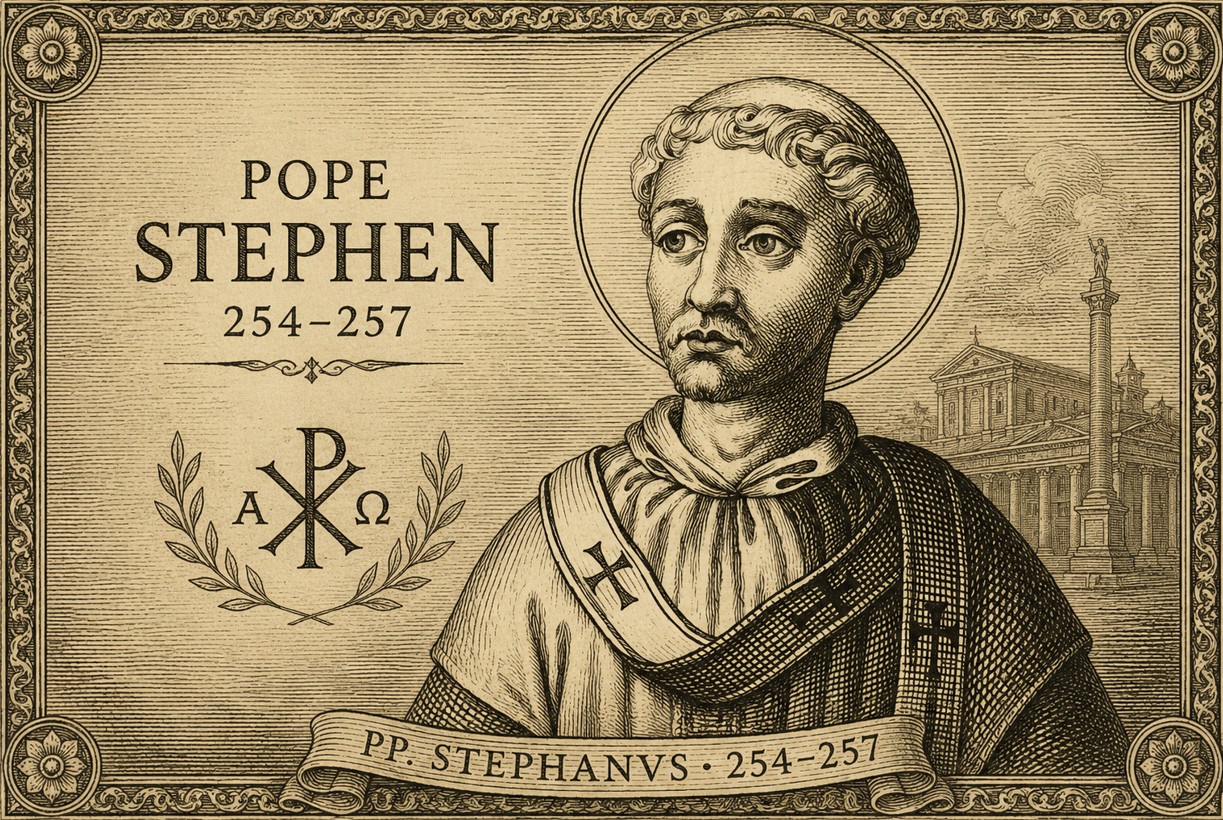
June 9, 2026: St. Stephen I, the twenty-third successor of Saint Peter, led the Church during a period of theological debate and growing challenges. While many early popes are remembered primarily for facing persecution, Stephen's pontificate is notable for addressing one of the earliest major disputes over Church practice and authority. His leadership helped shape the Catholic understanding of unity, apostolic succession, and the universal mission of the Church.


How does the Church preserve unity when sincere Christians disagree?
This question defined the papacy of Stephen I. During his brief reign, he faced intense debates over the validity of baptisms performed by heretical groups. His response would influence Church teaching for centuries and reinforce the importance of maintaining unity across the Christian world.


(CLICK HERE to follow Catholic Connect for regular Catholic News & Content)
Little is known about Stephen's early years, as surviving records from the third century remain limited. He likely grew up within Rome's Christian community during a time when believers continued to experience periodic persecution and social discrimination.
His formation in the faith prepared him to lead the Church during a period that required both conviction and diplomacy.
Stephen was elected Bishop of Rome in 254 AD following the death of Pope Lucius I. He inherited a Church that was recovering from persecution while also dealing with theological disagreements among bishops in different regions of the empire.
His leadership would soon be tested by one of the most significant doctrinal controversies of the age.
Stephen led the Church during the reigns of Emperors Valerian and Gallienus.
Although external threats remained serious, many of the most pressing challenges came from within the Church itself.
Stephen's most significant contributions include:
These decisions helped prevent further divisions and promoted consistency throughout the Christian world.
Stephen is remembered for:
His spirituality reflected a deep commitment to the unity Christ desired for His Church.
The greatest controversy of Stephen's papacy involved a disagreement with St. Cyprian of Carthage and several bishops in North Africa.
They argued that converts baptised by heretical groups should be baptised again. Stephen disagreed, insisting that baptisms performed in the name of the Trinity remained valid regardless of the minister's status.
The dispute became heated but ultimately contributed to the Church's clearer understanding of sacramental theology.
Although none of his writings survive in full, Stephen's leadership conveys an enduring lesson: Unity in the Church must be protected even when disagreements arise.
Stephen I has long been honoured by the Church.
Earlier traditions identified him as a martyr, though historical evidence for martyrdom remains uncertain.
Why does St. Stephen I matter today?
His legacy continues through the life of the Church today, carried forward by his successors.
To know more about the previous Popes, click here
By Catholic Connect Reporter
________________________
St. Stephen I, Pope Stephen I biography, twenty-third pope Catholic Church, Pope Stephen baptism controversy, St Cyprian and Pope Stephen, early Catholic popes, Catholic Church history, apostolic succession, sacramental theology, Church unity


© 2026 CATHOLIC CONNECT POWERED BY ATCONLINE LLP