- 24 May, 2026

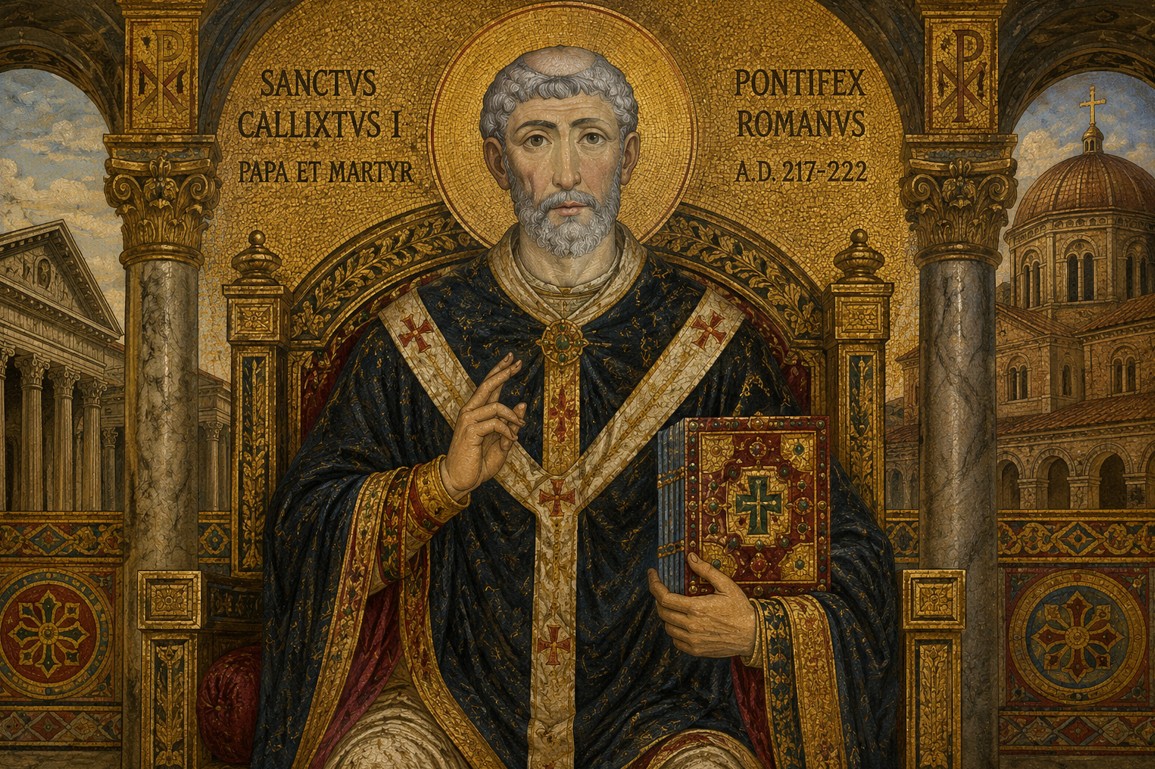
Pope Callixtus I, the sixteenth successor of Saint Peter, led the Church during a time of theological tension and social change. Remembered as a controversial yet compassionate leader, Callixtus emphasized mercy, reconciliation, and the power of forgiveness within the Christian community.


Callixtus I served during a period when the Church was expanding rapidly while facing serious internal disagreements over doctrine, morality, and Church discipline.
Can the Church forgive serious sins?


That question stood at the center of Callixtus I’s papacy. At a time when many Christians believed grave sinners should be permanently excluded from the Church, Callixtus emphasized repentance, mercy, and reconciliation. His approach sparked intense controversy—but also shaped the Church’s future understanding of forgiveness.
Pope Callixtus I served from 217 AD to 222 AD. He is best known for promoting mercy toward repentant sinners and for guiding the Church through one of its earliest major internal divisions.
(CLICK HERE to follow Catholic Connect and to stay updated with Catholic News & Content)
The early life of Callixtus was marked by hardship and struggle. Ancient accounts suggest he was born into slavery or a poor household in Rome. Before becoming pope, he experienced imprisonment and forced labor after financial failures connected to Christian funds.
Despite these difficulties, Callixtus eventually became a trusted assistant to Pope Zephyrinus and was placed in charge of Christian burial grounds along the Appian Way. The famous Catacomb of Callixtus in Rome still bears his name today.
After the death of Pope Zephyrinus, Callixtus was elected Bishop of Rome in 217 AD. His election immediately caused tension within the Church, especially from the theologian Hippolytus of Rome, who strongly opposed his leadership.
This conflict eventually led Hippolytus to become one of the earliest antipopes in Church history.
Callixtus I led the Church during the early third century under the Roman Empire.
The Christian community was becoming more organized, but disagreements over doctrine and morality created serious divisions.
Callixtus I made several influential contributions:
These contributions mattered because they helped shape the Church’s understanding of repentance, reconciliation, and pastoral care.
Callixtus is remembered for:
His spirituality reflected the Gospel message of mercy and redemption.
Callixtus faced major controversies throughout his papacy:
These disputes reveal the struggle of the early Church to balance truth, discipline, and mercy.
Though no writings survive directly from Callixtus, his leadership communicates a lasting message: God’s mercy is greater than human failure.
Tradition holds that Callixtus died a martyr around 222 AD during a local uprising in Rome.
He is honored for his leadership, perseverance, and commitment to reconciliation.
St. Callixtus I represents:
His papacy helped shape the Church’s pastoral approach toward repentance and reconciliation.
Why does St. Callixtus I matter today?
His legacy continues through the life of the Church today, carried forward by his successors.
To know more about the previous Popes, click here
By Catholic Connect Reporter
________________________
St. Callixtus I, Pope Callixtus biography, sixteenth pope Catholic Church, early Catholic popes, Hippolytus antipope, mercy in Catholic Church, Christian forgiveness history, Catacomb of Callixtus, Catholic Church history, apostolic succession


© 2026 CATHOLIC CONNECT POWERED BY ATCONLINE LLP